
Growing a podcast on Spotify in 2026 is a combination of two things: showing Spotify's algorithm that listeners care, and giving people outside of Spotify a reason to tap play in the first place. Most shows that break through aren't doing anything exotic — they publish consistently, optimize their metadata, and run a disciplined short-form video strategy on TikTok, Instagram Reels, and YouTube Shorts. This guide walks through exactly what to do, in priority order. If you haven't launched yet, start with our how to start a podcast on Spotify guide first.
Spotify now rivals Apple Podcasts as the most-used podcast platform globally, and the recommendation surface area inside the app (Made for You, Your Daily Drive, related-show rails) drives a real share of new follows. Shows like Diary of a CEO, Huberman Lab, and My First Million have all used the same core playbook — strong content plus aggressive short-clip distribution — to go from niche to mainstream. You can run the same playbook.
What moves the needle on Spotify
- Publishing cadence: A consistent weekly or bi-weekly schedule
- Metadata: Episode titles and descriptions that match real search queries
- Listener retention: Strong first 30 seconds, no bloated intros
- Short-form distribution: 30+ clips per episode across TikTok, Reels, and Shorts
- On-platform engagement: Q&A, polls, chapters, video
- Cross-promotion: Guesting on other podcasts in your niche
How Spotify's Algorithm Actually Works in 2026
Spotify doesn't publish algorithm details, but patterns are consistent across shows that grow: the platform rewards follower growth, consistent publishing, high completion rates, and episode-level engagement (saves, shares, Q&A and poll responses). Shows that drop once a week for 12+ weeks with solid retention get surfaced in Made for You, Your Daily Drive, and related-show rails for listeners of adjacent podcasts.
The flip side is that gaps kill momentum. A four-week hiatus drops most shows out of personalized recommendations until they've published a few episodes consecutively again. Treat consistency as a feature, not a goal.
Signals Spotify seems to reward
- Follower growth week-over-week: Spikes when you publish plus a steady baseline from discovery
- Completion rate: The percentage of listeners who make it past the 75% mark
- Save and share actions: Listeners actively interacting with episodes
- Q&A and poll responses: Treated as high-intent engagement
- Cross-show listening: Your listeners also listen to related shows
Optimize Your Show and Episode Metadata
This is the single highest-ROI thing you can do this week. Most shows leave 20–40% of their potential Spotify search traffic on the table because their episode titles read like diary entries rather than search results. Fix that first before you do anything else.
Show-Level Optimization
Your show title and show description are what get indexed in Spotify search. Front-load the primary keyword someone would actually type.
Show metadata checklist
- Show title: Include the topic keyword (e.g., "Acquired — Stories behind great companies" beats "Acquired")
- Show description: First 100 characters carry the hook; Spotify truncates on mobile
- Category: Pick the most specific relevant primary category; use the secondary slot strategically
- Cover art: Readable at 55x55 thumbnail size; high contrast; avoid thin fonts
- Show trailer: 60-second trailer pinned to the top of the feed
Episode-Level Optimization
Episode titles are the second-biggest lever. Lead with the topic or guest, not the episode number. Think like YouTube: a title is a promise about what the listener gets.
Title patterns that work
- Topic + outcome: "How to Price a SaaS Product in 2026"
- Guest + angle: "Sam Parr on Building Then Selling The Hustle"
- Contrarian claim: "Why Most Podcast Advice is Wrong"
- Numbered list: "7 Lessons from 100 Failed Launches"
Avoid: "Ep 47 — Chatting with a friend", "The One About X", and anything that requires the listener to already be a fan to understand. Your future listeners don't have that context yet.
Publishing Cadence That Actually Works
Pick a cadence you can hold for 12 months, not 12 weeks. For most creators, that's weekly. Bi-weekly works if your episodes are very high production. Daily is only realistic for news-driven formats like The Daily or Morning Brew Daily.
Cadence rules
- Ship on the same day every week: Tuesday and Wednesday mornings tend to peak
- Batch record: Record 3–4 episodes in one session to build a buffer
- Never skip without a pre-announced break: If you need a break, say so on the feed
- Use a scheduling tool: Upload episodes with a future publish date to guarantee consistency
The Short-Form Clip Strategy (The Biggest Growth Lever)
In 2026, the single fastest way to grow a podcast isn't inside Spotify — it's on TikTok, Instagram Reels, and YouTube Shorts. Look at almost any podcast that grew significantly in the last two years — Diary of a CEO, Chris Williamson's Modern Wisdom, My First Million, Shawn Ryan Show — and you'll find a relentless short-clip engine behind it.
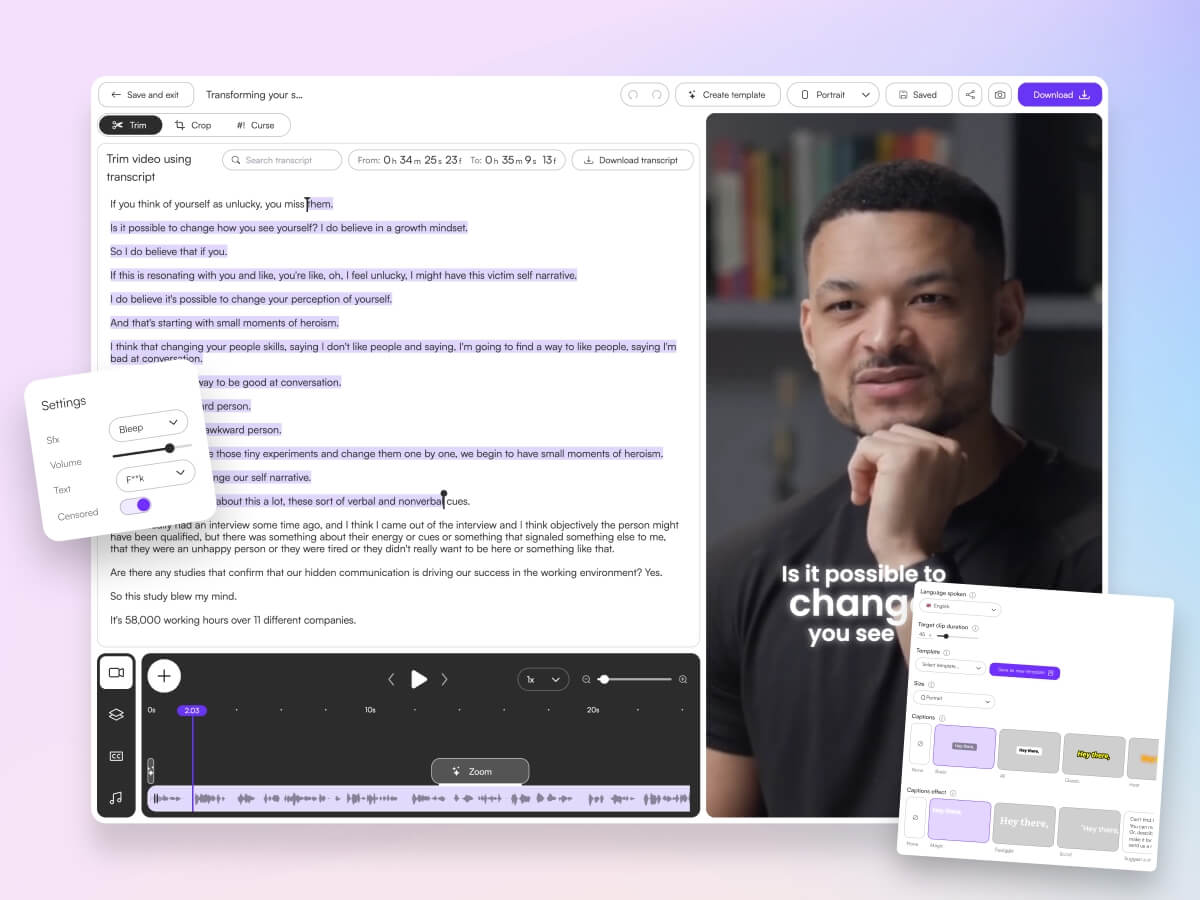
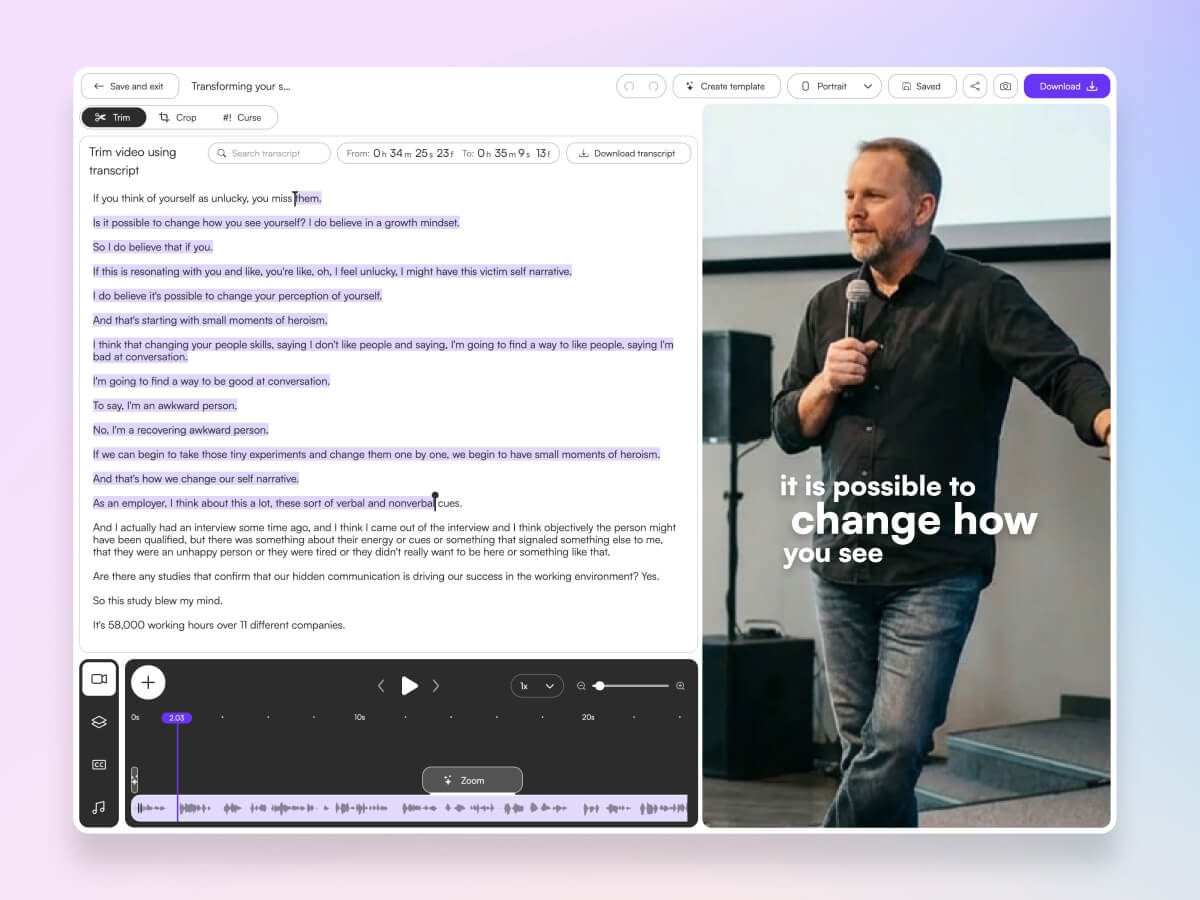
The job of a clip is simple: take the 30–60 seconds of any episode that stand alone as a compelling hook, put captions on it, and post it daily across TikTok, Reels, and Shorts. A single 60-minute episode easily yields 20–40 usable clips. Manually, that's a full-time editing job. Tools like Choppity automatically generate 30+ short clips per episode, burn in captions, and auto-reframe to vertical — turning what used to be a team's worth of work into a 10-minute upload.
How to run a clip strategy
- One long episode becomes 20–40 clips: Extract every strong moment, not just the obviously viral ones
- Post daily, not in bursts: The algorithms reward consistent daily uploads
- Captions are non-negotiable: Most social video is watched muted
- Vertical 9:16 aspect ratio: Don't post 16:9 video to TikTok or Reels
- Hook in the first 1.5 seconds: Strongest line of the clip at the start, not the end
- Direct listeners back to Spotify: "Search [Show Name] on Spotify" in the caption, link in bio
Pro Tip: Create a Separate YouTube Shorts Channel
One of the biggest underrated moves in 2026 is running your podcast's short clips on a dedicated YouTube Shorts channel rather than dumping them on your main podcast channel. If you're already publishing long-form video podcast episodes to YouTube, mixing 30-second clips into the same feed dilutes both the algorithm's understanding of your channel and the experience for your subscribers.
A separate Shorts channel solves both problems. The algorithm gets a clean signal ("this channel is a Shorts channel, recommend it alongside other Shorts content"), and your long-form viewers don't get notification fatigue from daily clip uploads. Plenty of major podcasts run this setup — a main channel for full episodes and a Clips or Shorts channel for the daily cutdowns — and both channels benefit. Cross-link them in descriptions and end screens so the audience can flow between the two.
Why a separate Shorts channel wins
- Cleaner algorithmic signal: YouTube can categorize the channel unambiguously
- No audience dilution: Long-form subscribers aren't buried under daily clip uploads
- Two chances at recommendation: Each channel surfaces to a different viewer intent
- Separate analytics: You can measure clip performance without long-form muddying the data
- Clear naming and branding: "[Show Name] Clips" or "[Show Name] Shorts" is immediately scannable
Use Spotify for Podcasters Features You Already Have
Spotify for Podcasters gives every creator a set of free growth features most shows never turn on. Each one is a direct signal to the Spotify algorithm that your listeners are engaged.
Features to turn on today
- Q&A prompts: Ask a specific question in the outro; responses show up in the dashboard
- Polls: 2–4 option polls attached to episodes; takes 10 seconds per episode
- Chapters: Timestamps that let listeners skip; improves completion rates
- Video podcasts: If you already film for YouTube, upload the video file to Spotify too
- Spotify Clips: Native short clips that link back to your full show inside Spotify
- Episode cover art: Custom per-episode art boosts click-through vs. the default show art
Cross-Promotion and Guest Appearances
Guesting on adjacent podcasts is how Alex Cooper grew Call Her Daddy beyond her initial audience, and how Chris Williamson grew Modern Wisdom. Find 20 podcasts one size bigger than yours in an adjacent niche and pitch a specific, generous appearance — not a generic "I'd love to come on."
Cross-promotion plays
- Guest on one podcast per month: Focus on shows 2–5x your size in adjacent niches
- Feed swap with peers: Run a trailer of a peer's show; they run yours
- Joint episode: Host a peer on your show; they host you on theirs the same week
- Clip each other: Cut clips from the cross-appearance and post on both sets of socials
Build Owned Channels: Email and a Landing Page
Spotify can change its algorithm overnight, but an email list is yours forever. Every podcast that's survived a platform shift had an email list to fall back on.
Owned-channel setup
- Simple landing page: One page, one email capture, a link to the latest episode
- Weekly episode email: Sent the same day the episode drops, with a one-paragraph summary and key timestamps
- Lead magnet: A free PDF, template, or checklist tied to your niche to drive signups from clips
- Show notes page: SEO-optimized page per episode with timestamps, guest bio, and links
Monetization Options on Spotify
Monetization doesn't drive growth directly, but it reinvests in growth. Once you have 1,000+ listeners per episode, several monetization paths open up.
Monetization paths
- Direct sponsorships: Highest CPM; usually starts around 5,000 downloads per episode
- Ad networks: Programmatic ads via Spotify Audience Network, Acast, or Gumball
- Spotify Podcast Subscriptions: Premium tier for exclusive episodes
- Patreon or paid community: Direct listener monetization; highest margin
- Your own product: The highest-leverage path — a course, SaaS, or coaching offer you control
- Affiliate links: Earn a cut of purchases driven by your show
Measure What Matters
Spotify for Podcasters gives you enough data to steer growth. Ignore vanity metrics and track the three that actually predict long-term growth.
Core metrics to track weekly
- Followers gained per episode: Is new content pulling in net-new followers?
- Listener retention curve: Where do listeners drop off? Usually the first 60 seconds
- Episode-level plays in the first 7 days: Better signal than all-time plays
- Save and share count: High-intent engagement the algorithm rewards
Common Growth Mistakes
Most shows that plateau are making the same three or four mistakes. Avoiding them is the cheapest way to grow.
Mistakes to fix today
- No short-clip strategy: Relying on Spotify's in-app discovery alone
- Inside-joke episode titles: Titles that don't explain what the episode is about
- Long pre-rolls: 90-second theme songs before content starts
- Skipping publishing weeks: Any gap over two weeks hurts the algorithm
- Mixing clips and long-form on one YouTube channel: Dilutes both audiences
- No email list: Nothing to fall back on if platform discovery slows
- Ignoring Q&A and polls: Free engagement signal left on the table
Frequently Asked Questions
How long does it take to grow a podcast on Spotify?
Realistic timelines: most consistent creators reach 500 listeners per episode in 6–9 months, 1,000+ in 12–18 months, and 5,000+ in 2–3 years. Shortcuts exist (a big guest, a viral clip, an industry shoutout), but consistency is the only reliable path.
Do Spotify Clips actually drive growth?
Spotify Clips help with in-app discovery and make it easy for existing fans to share episodes, but they rarely drive large growth on their own. The bigger lever is clips posted to TikTok, Instagram Reels, and YouTube Shorts using a tool like Choppity to generate dozens per episode.
Is weekly publishing enough to grow on Spotify?
Yes, weekly is the sweet spot for most creators. Twice-weekly can accelerate growth but doubles the production load. Daily only works for news formats. Whichever you pick, consistency matters more than frequency.
Should I upload video podcasts to Spotify?
If you already film for YouTube, yes — upload the same video to Spotify for no extra work. Spotify's video podcast player gets preferred placement in the app and tends to lift completion rates. Audio-only is still fine if you don't film.
How do I get featured on Spotify?
Spotify's editorial team features shows with consistent publishing, strong retention, and growing followers. Curators look at shows 3–6 months old with a clear niche. Submit releases through the Spotify for Podcasters "Recommend for new and noteworthy" submission form about one week before each episode drops.
What's the difference between a main YouTube channel and a Shorts channel for a podcast?
A main channel hosts full-length video episodes (45–120 minutes). A separate Shorts channel hosts the daily 30–60 second clips. Running them separately keeps YouTube's algorithm from confusing the two content types and prevents subscriber fatigue on the main channel from daily clip uploads.
Do I need a big audience before I can monetize?
For programmatic ads and Spotify's built-in monetization, typically 1,000–5,000 downloads per episode minimum. For your own products, affiliate links, or a paid community, you can monetize from episode one. Direct monetization (your own course, SaaS, or service) is usually more lucrative at any audience size.
Final Thoughts
Growing on Spotify in 2026 is not a secret formula — it's the same handful of disciplined moves repeated for 12+ months. Publish weekly without gaps. Write episode titles like YouTube titles. Cut 30+ clips per episode with Choppity and distribute across TikTok, Reels, and a dedicated YouTube Shorts channel (see our best AI podcast clip makers comparison if you're still choosing a tool). Turn on Q&A, polls, and chapters inside Spotify for Podcasters. Guest on one adjacent podcast a month. Build an email list.
Do those six things for a year and you'll almost certainly be ahead of 95% of podcasts that launched the same month as yours. Don't do them, and no amount of gear upgrades or metadata tricks will move the needle. The growth comes from the work, and the tools just make the work leverageable.

Written by
Michael WongFounder & CEO · Founder of Choppity
Content creator for 12+ years with 215K+ YouTube subscribers and an active presence across YouTube, Instagram, LinkedIn, and X. As founder of Choppity, Michael has personally tested every major AI clip maker — giving him a unique perspective on what works and what doesn't for real creators.